
Colonoscopy
A full examination of the large bowel, and the best test for catching bowel cancer early by removing polyps before they turn.
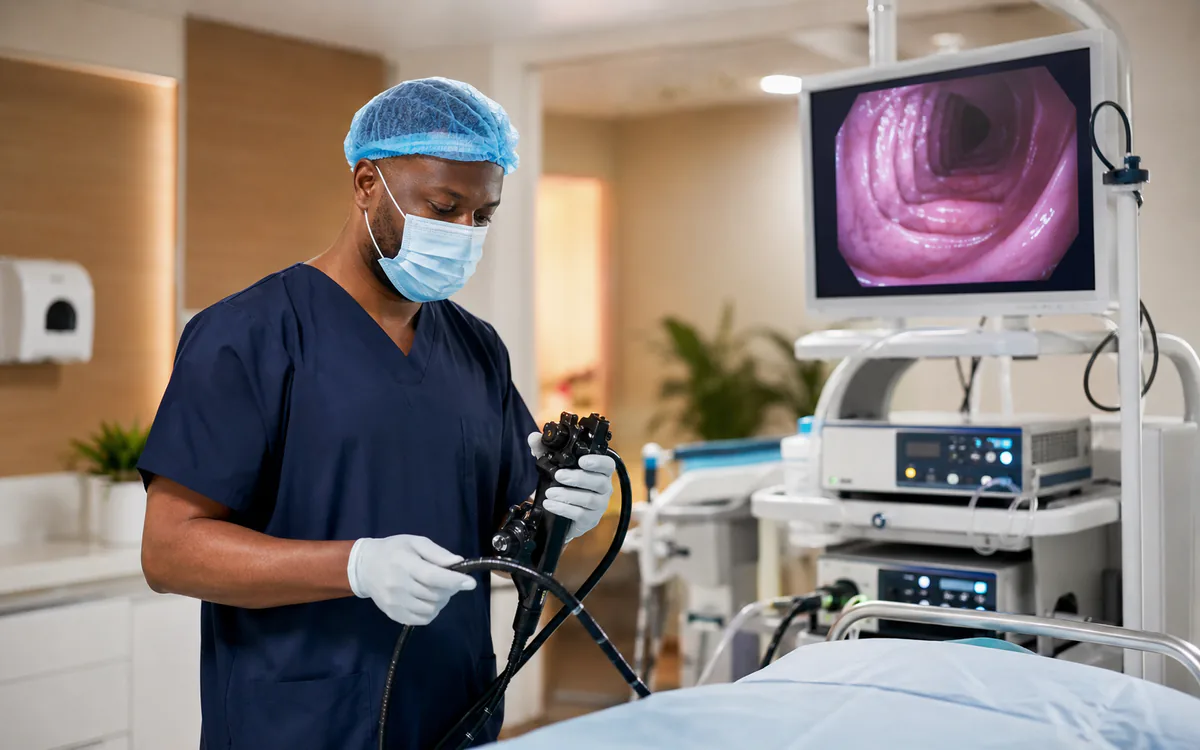
Bowel prep the day before clears the bowel. Clear fluids, and follow the timing we give you.
Usually performed without sedation, with optional anaesthesia on request. You are monitored throughout; polyps may be removed if appropriate.
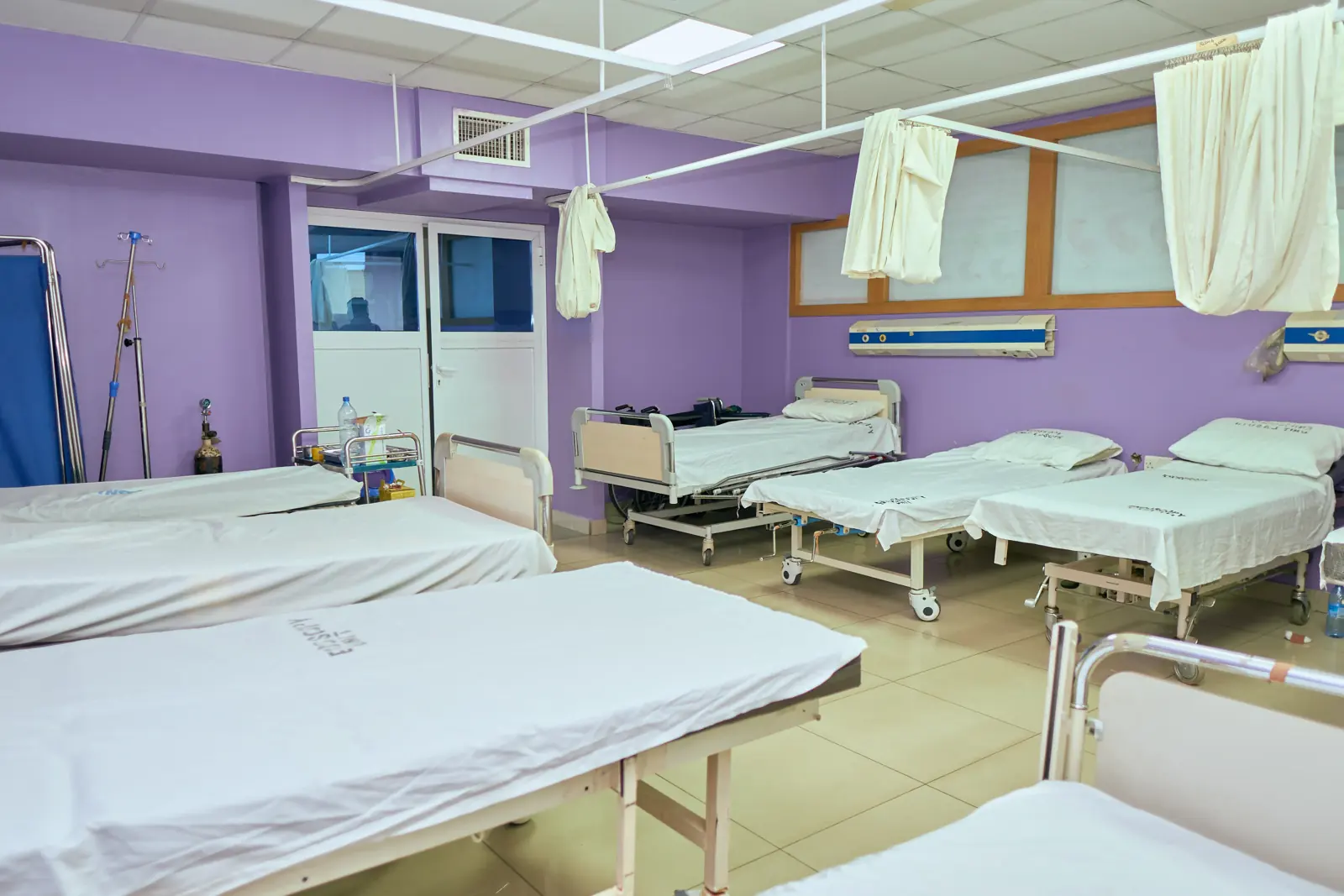
Aftercare and recovery depend on whether anaesthesia was used. The team explains when you can eat and go home.
What a colonoscopy examines
A colonoscopy examines the full length of the large bowel using a flexible camera. It is the most reliable way to investigate rectal bleeding, a lasting change in bowel habit, unexplained anaemia and abdominal pain, and it is the gold standard for bowel cancer screening.
Prevention, not just detection
Most bowel cancers begin as polyps, small growths on the bowel wall that change slowly over years. During a colonoscopy we remove those polyps as we find them, where appropriate, with comfort options discussed beforehand.
That makes colonoscopy unusual among medical tests: it does not just find disease, it prevents it. No scan or stool test can do that.
Preparation
The bowel must be completely empty. That means a low-residue diet for a few days, clear fluids the day before, and a prep solution in the evening that clears you out over several hours.
The preparation is the part most patients find hardest, and we give you full written instructions when you book. Do not cut it short because you feel clean; a half-prepared bowel is how a small polyp gets missed.
On the day
At Zendale, colonoscopy is usually performed without sedation. Optional anaesthesia can be requested for greater comfort, following assessment by the clinical team. You are monitored throughout and may feel pressure, bloating or cramping during the examination.
The team explains your recovery and aftercare before you leave. If you request anaesthesia or receive sedation, arrange an accompanying adult and transport home, and follow the restrictions issued by the clinical team.
Results
We can usually describe what we saw once you are alert. Any polyp removed or biopsy taken goes to the laboratory, and that result follows. Your referring doctor receives a written report with images on the same day, along with advice on when the test should be repeated.
Diagnostic care
What this procedure investigates
Colonoscopy examines the large bowel to investigate symptoms or support screening. Findings and samples, where needed, help guide the next steps in your care.
Therapeutic care
How treatment may be involved
Suitable polyps may be removed during colonoscopy, so the procedure can provide treatment as well as an examination. The clinician explains what is appropriate and whether further care or laboratory results are needed.
Any treatment depends on clinical assessment, the findings and your consent. Ask the team what is planned for your procedure.
Your care, before and after
More than the examination.
When you request care, our team contacts you to discuss the clinical request and a suitable date. An online request is not a confirmed appointment. If another doctor is coordinating your care, tell us so communication stays connected.
Before proceeding, the clinician explains the intended benefit, alternatives and relevant risks. You can ask what the examination can answer, whether tissue samples or treatment may be needed, and what findings would mean for your next step.
Questions worth bringing
- Why has this examination been recommended for me?
- What preparation and medication advice applies to me?
- What comfort or sedation options are appropriate?
- Will samples need separate laboratory analysis?
- Who will explain my results and arrange follow-up?
Follow the individual instructions issued by the clinical team. Do not stop prescribed medicines based on a general webpage.
Understanding benefits and risks
Endoscopy can help investigate symptoms and, in some cases, provide treatment. Risks vary with the procedure and your health. They can include bleeding, a reaction to sedation or injury to the digestive tract. ERCP also carries a risk of pancreatitis. Your clinician will discuss the risks relevant to your planned examination.
Aftercare instructions explain what to expect and which symptoms need urgent attention. Seek prompt medical help for severe or worsening pain, breathing problems, significant bleeding or fever after a procedure.
Further patient information: NIDDK ↗Recovery at Zendale Endoscopy
Our team explains recovery, discharge and your individual aftercare arrangements before you go home.
Common questions
Does a colonoscopy hurt?
You may feel pressure, bloating, cramping or discomfort. We do not routinely sedate for colonoscopy. Optional anaesthesia is available on request; discuss your comfort needs with the team before the procedure.
How long does a colonoscopy take?
The examination usually takes twenty to forty minutes. Allow additional time for assessment and aftercare; recovery time depends on whether anaesthesia or sedation was used.
At what age should I have a screening colonoscopy?
From 45 for people at average risk, and earlier if a close relative has had bowel cancer.
How much does a colonoscopy cost in Lagos?
It varies by centre, and by whether optional anaesthesia, polyp removal and histology are included. Call 070 7056 6272 for a current all-inclusive figure.
Book this procedure
Call +234 707 056 6272, message +234 707 056 6272 on WhatsApp, or book online.