
ERCP
A specialised procedure that clears stones and blockages in the bile duct through the gut, relieving jaundice without open surgery.
Blood tests and scans first. You will be admitted and prepared, and fasted beforehand.
Under sedation, the duct is reached and the stone removed or a stent placed to drain it.
Watched closely afterwards, as ERCP needs a period of observation before discharge.
What ERCP treats
ERCP, endoscopic retrograde cholangiopancreatography, treats blockages in the bile and pancreatic ducts. The commonest reason is a gallstone that has escaped the gallbladder and lodged in the bile duct, causing jaundice and severe pain.
It is also used for narrowings of the duct and to place stents that keep the duct draining.
How it works
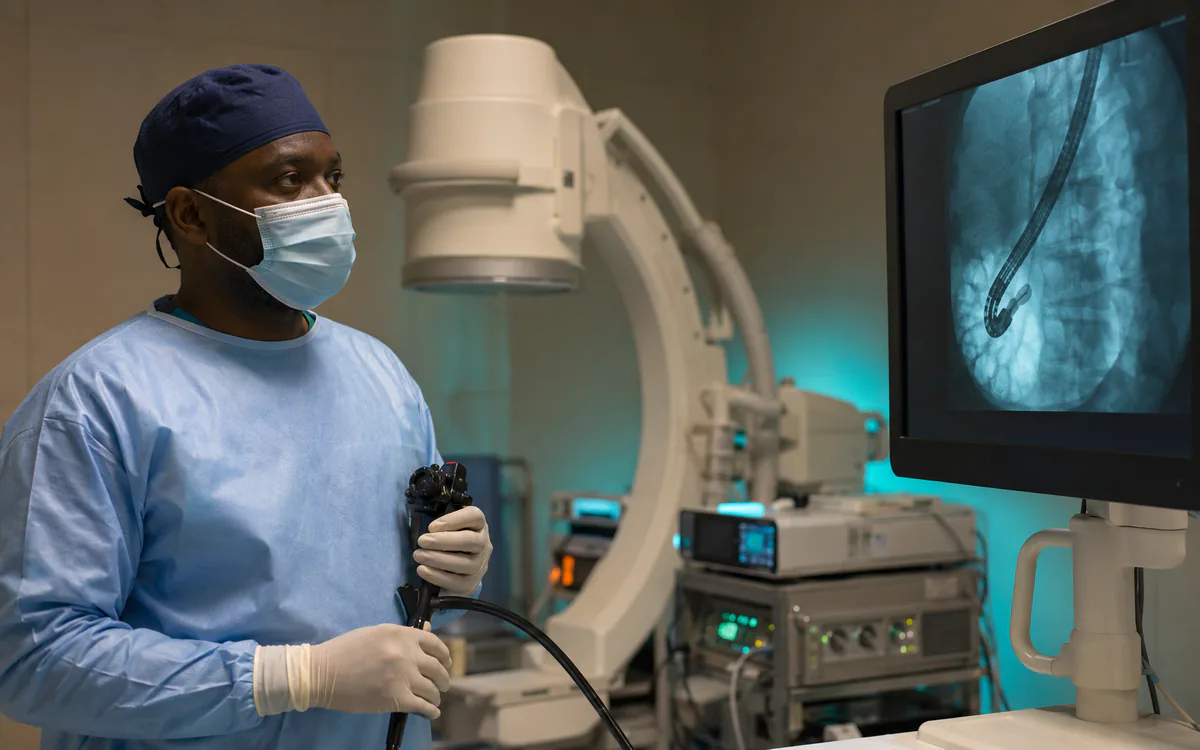
Under sedation, an endoscope is passed through the mouth and stomach to the point where the bile duct drains into the small intestine. A fine tube is passed into the duct, and X-ray imaging with contrast shows exactly where the blockage sits.
The stone is then drawn out with a balloon or basket, or a small stent is placed to let bile flow freely again. There is no incision, because the route in is one you already have.
When it is urgent
Yellow eyes or skin with fever and upper abdominal pain can indicate cholangitis, an infection of the blocked duct. That combination needs urgent hospital assessment, not an appointment next week.
Recovery
ERCP requires a period of observation afterwards, because it carries a small risk of inflaming the pancreas. Most patients go home after a short stay, with the jaundice settling over the following days as bile drains again.
Because ERCP is a specialised procedure, it is best performed where surgery, radiology and inpatient care are on the same campus. Our unit sits inside LASUTH for exactly that reason.
Diagnostic care
What this procedure investigates
ERCP focuses on problems involving the bile and pancreatic ducts. Your clinical team reviews previous investigations and explains why this procedure is appropriate.
Therapeutic care
How treatment may be involved
ERCP can provide treatment such as removing a stone from a bile duct or placing a stent to support drainage, when clinically appropriate. The team explains the proposed treatment and relevant risks.
Any treatment depends on clinical assessment, the findings and your consent. Ask the team what is planned for your procedure.
Your care, before and after
More than the examination.
When you request care, our team contacts you to discuss the clinical request and a suitable date. An online request is not a confirmed appointment. If another doctor is coordinating your care, tell us so communication stays connected.
Before proceeding, the clinician explains the intended benefit, alternatives and relevant risks. You can ask what the examination can answer, whether tissue samples or treatment may be needed, and what findings would mean for your next step.
Questions worth bringing
- Why has this examination been recommended for me?
- What preparation and medication advice applies to me?
- What comfort or sedation options are appropriate?
- Will samples need separate laboratory analysis?
- Who will explain my results and arrange follow-up?
Follow the individual instructions issued by the clinical team. Do not stop prescribed medicines based on a general webpage.
Understanding benefits and risks
Endoscopy can help investigate symptoms and, in some cases, provide treatment. Risks vary with the procedure and your health. They can include bleeding, a reaction to sedation or injury to the digestive tract. ERCP also carries a risk of pancreatitis. Your clinician will discuss the risks relevant to your planned examination.
Aftercare instructions explain what to expect and which symptoms need urgent attention. Seek prompt medical help for severe or worsening pain, breathing problems, significant bleeding or fever after a procedure.
Further patient information: NIDDK ↗Recovery at Zendale Endoscopy
Our team explains recovery, discharge and your individual aftercare arrangements before you go home.

Common questions
Is ERCP major surgery?
No. ERCP is an endoscopic procedure performed through the digestive tract under sedation, with no incision. It is more involved than a standard gastroscopy and requires observation afterwards.
How long does recovery from ERCP take?
Most patients are observed for a period and stay briefly in hospital. Jaundice typically settles over the following days once the duct is draining.
What are the signs I might need an ERCP?
Yellow eyes or skin, dark urine, pale stools, severe upper right abdominal pain, and itching. With fever, seek urgent care.
Book this procedure
Call +234 707 056 6272, message +234 707 056 6272 on WhatsApp, or book online.