
Guides · 9 min read
Endoscopy in Lagos: a complete guide to what actually happens
Every stage of an endoscopy in Nigeria, from the referral to the report, with no medical fog and no scare tactics.
Published 4 March 2026 · Updated 30 July 2026 · Zendale Endoscopy Centre
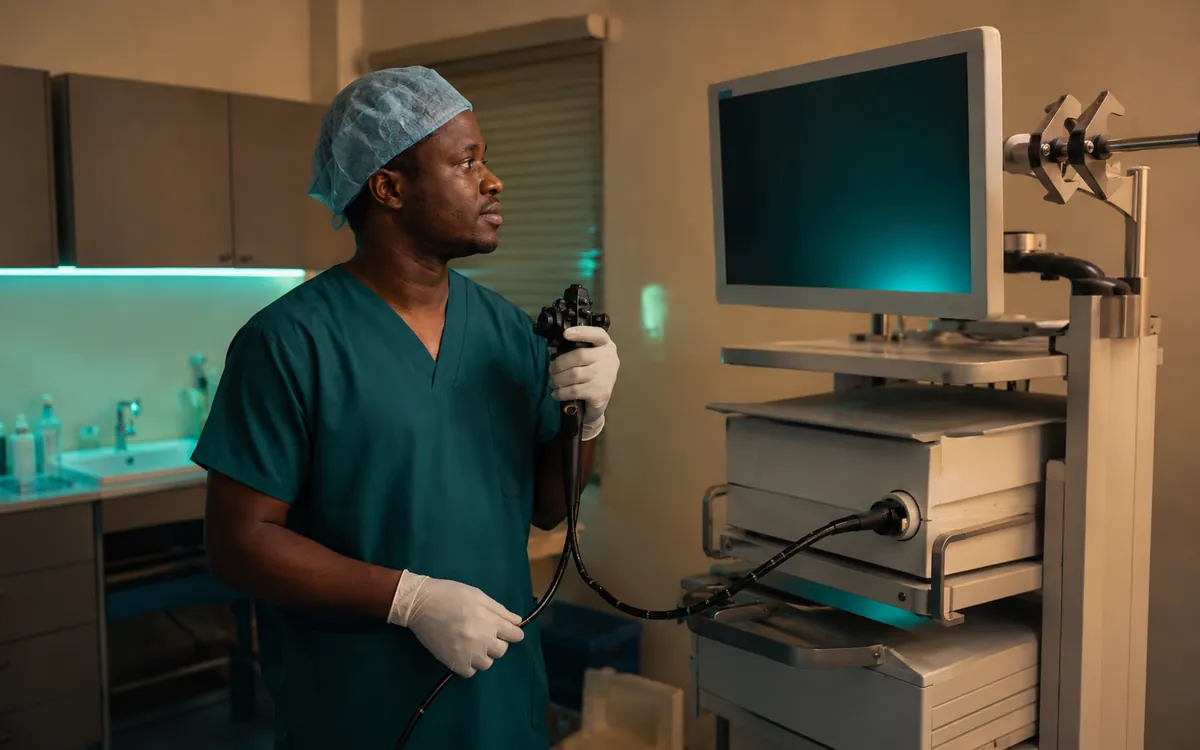
If your doctor has mentioned an endoscopy and you are now reading about it late at night, this guide is for you. It walks through the whole thing in order, in plain language, from someone who does these every week in Lagos.
What an endoscopy actually is
An endoscope is a slim, flexible tube with a light and a small camera at its tip. It lets us look directly at the lining of your digestive tract on a screen, rather than guessing from symptoms. Because the camera goes to the exact place the trouble is, it answers questions that months of medication never will.
There are three procedures you are most likely to be offered in Nigeria:
- Gastroscopy, sometimes called upper GI endoscopy, which examines the oesophagus, stomach and the first part of the small bowel through the mouth.
- Colonoscopy, which examines the full length of the large bowel.
- ERCP, a specialised procedure for stones and blockages in the bile duct.
Why your doctor referred you
People are usually sent for one of a handful of reasons: reflux that will not settle, difficulty swallowing, stomach pain that keeps returning, bleeding, a lasting change in bowel habit, unexplained anaemia, or simply reaching the age where bowel-cancer screening makes sense.
A referral is not a verdict. In most cases we are ruling things out, and the value of the test is that you stop wondering.
Preparing for the procedure
For a gastroscopy, preparation is simple: an empty stomach, so no food for around six hours beforehand. Tell the unit about your regular medicines, especially blood thinners and diabetes medication, because timing may need adjusting.
For a colonoscopy, the bowel must be completely empty so we can see the wall clearly. That means clear fluids and a prep solution the day before. It is the part people find hardest, and we will not pretend otherwise, but it is inconvenience rather than pain. Do not cut the prep short because you feel clean enough; a half-prepared bowel is how a small polyp gets missed.
On the day
If anaesthesia or sedation is planned, arrange someone to take you home and follow the team’s driving restrictions. A nurse settles you in and a doctor goes through everything again and answers whatever is still worrying you.
The comfort plan depends on the examination. At Zendale, colonoscopy is usually performed without sedation; optional anaesthesia can be requested and discussed with the team. Before proceeding, the clinician explains the plan, monitoring and any additional recovery arrangements.
The procedure itself usually takes twenty to forty minutes. You may feel pressure or bloating from the air used to open the gut for viewing. That settles.
What we can do while we are there
This is where endoscopy earns its place over a scan. We are not just looking; we can treat. During a colonoscopy we can remove polyps as we find them. During a gastroscopy we can test for H. pylori, take biopsies, and stop a bleeding ulcer. In ERCP we can remove a bile-duct stone or place a stent to relieve jaundice. The clinician explains what sensations you may experience and the comfort options appropriate to your procedure.
Recovery and results
Aftercare depends on the examination and whether anaesthesia or sedation was used. You may feel bloated after a colonoscopy. The team explains eating, going home and which symptoms need attention. If anaesthesia or sedation was used, follow the instructions about accompaniment, driving and usual activities.
Some findings we can tell you straight away once you are alert enough. If we took a biopsy or removed a polyp, the laboratory result follows. Your referring doctor should receive a written report with images, and at our unit that goes out the same day.
Choosing an endoscopy centre in Lagos
Ask four questions, and the answers will tell you a great deal:
- Is the procedure performed and reported by a consultant, or delegated?
- Is sedation offered, and is recovery monitored?
- How are the scopes decontaminated between patients?
- How quickly does my own doctor receive the report?
Scope decontamination in particular is the quiet detail that separates a proper unit from a room with a camera in it. Every scope should be cleaned on a tracked, audited cycle between patients.
The bottom line
An endoscopy involves preparation, the examination and a recovery plan suited to you. In exchange you get a real answer, and often the problem treated in the same sitting. Compared with carrying a question for another year, it is a good trade.
If you would like to talk it through before booking, call the unit on 070 7056 6272. We are at Ayinke House, LASUTH, Ikeja.
Common questions
What is an endoscopy?
An endoscopy is an examination of the inside of your digestive tract using a slim, flexible tube with a light and a camera at its tip. Gastroscopy looks at the upper gut through the mouth; colonoscopy examines the large bowel.
Is endoscopy painful?
Most people describe pressure or bloating rather than pain. Sedation is offered, and with it most patients remember very little of the procedure.
How long does an endoscopy take in Lagos?
The procedure itself usually takes twenty to forty minutes. Ask how long to allow for admission, the procedure and recovery. Recovery arrangements depend on the examination and whether anaesthesia or sedation is used.
Do I need a referral for endoscopy in Nigeria?
Not necessarily. Many centres, including ours, accept self-referrals as well as referrals from your own doctor. Either way the report goes back to your doctor.
Your next step
This information supports a conversation with your clinician; it does not diagnose your symptoms. Request an appointment online, choose help deciding if you are unsure, or call +234 707 056 6272, message +234 707 056 6272 on WhatsApp, or ask your doctor to send a referral to zendaleendoscopy@gmail.com.
Blood in the stool: what to notice, when to get help and what to tell your doctor
A practical guide to describing bleeding clearly and getting the right level of help, without assuming the cause.
Before your endoscopy: the questions that make preparation clearer
From medicines and transport to fees and results, a useful conversation begins before procedure day.
Your endoscopy report and biopsy results: understanding the next conversation
The examination, the written report and a laboratory result may arrive at different times. Here is how to keep the next steps clear.