
Stomach · 7 min read
Peptic ulcers: why your stomach hurts, and what actually fixes it
Stress and pepper get the blame. The real causes are different, and far more treatable once identified.
Published 5 August 2026 · Zendale Endoscopy Centre
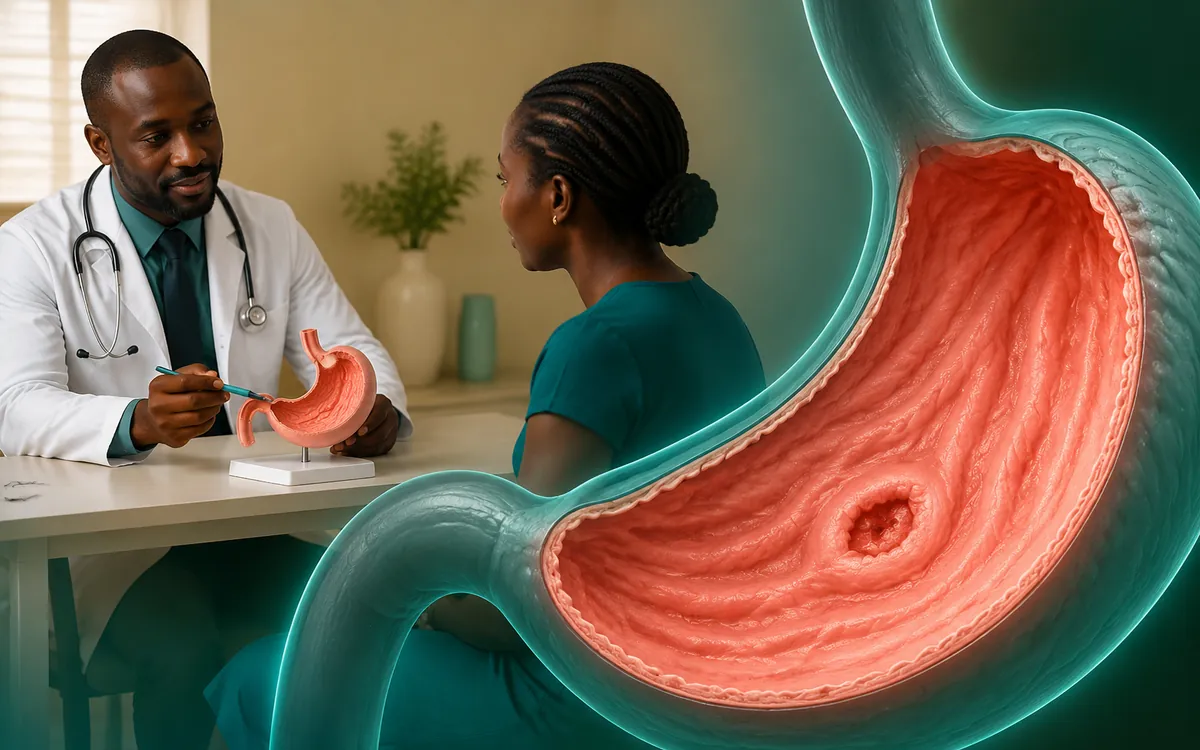
Ask most Nigerians what causes an ulcer and you will hear two answers: stress and pepper. Both are wrong, or at least badly incomplete, and that misunderstanding is why so many people manage ulcers for years without ever fixing them.
What an ulcer actually is
A peptic ulcer is an open sore in the lining of the stomach or the first part of the small intestine. Your stomach produces acid strong enough to break down food, and protects itself with a layer of mucus. When that protection is damaged, acid reaches the wall beneath and burns a crater into it.
The real causes
H. pylori infection is behind the majority. This bacterium lives in the stomach lining, is very common in Nigeria, and damages the protective layer directly.
Anti-inflammatory painkillers are the second major cause: ibuprofen, diclofenac, aspirin and similar drugs. They reduce pain effectively but also reduce the stomach's protective mucus. This matters enormously here, because these are sold freely and many people take them daily for joint or back pain over months without anyone warning them.
Stress and spicy food can make an existing ulcer feel worse. Neither creates one. If you have been avoiding pepper for years while continuing daily diclofenac, you have been treating the wrong thing.
The pain pattern
Ulcer pain has a fairly recognisable rhythm:
- Burning or gnawing pain in the upper middle abdomen
- Often worse when the stomach is empty, so between meals and at night
- Briefly relieved by eating, or by milk or antacids
- Returning an hour or two later
- Coming in waves over weeks, then easing, then returning
Bloating, belching, nausea and feeling full quickly often come with it.
The signs that need urgent attention
An untreated ulcer can bleed or, rarely, perforate. Go to hospital promptly for:
- Vomiting blood, or something resembling coffee grounds
- Black, tarry stool
- Sudden, severe abdominal pain, particularly if your abdomen becomes rigid
- Dizziness or fainting alongside stomach symptoms
How we confirm it
Symptoms alone suggest an ulcer but do not prove one, and a few conditions mimic it. A gastroscopy settles it: we see the ulcer directly, note its size and site, test for H. pylori from a tiny sample, and rule out the small number of cases where an ulcer conceals something more serious.
That last point is why we scope people over 45 with new symptoms, and anyone with alarm features, rather than treating blindly.
Treatment that actually heals
Effective treatment has three parts:
Reduce the acid. A proton pump inhibitor lets the lining heal. This is the part most people already have.
Remove the cause. If H. pylori is present, it needs clearing with a specific antibiotic combination taken as a complete course. If painkillers are the cause, they need stopping or changing, with your doctor finding a safer option for your pain.
Confirm it worked. After treating H. pylori, a follow-up test confirms it has cleared. Skipping this is how people end up back where they started.
Antacids alone are the equivalent of mopping the floor while the tap runs.
Practical things that help
- Stop anti-inflammatory painkillers unless a doctor has told you to continue
- Use paracetamol for pain where it is adequate
- Stop smoking, which slows ulcer healing significantly
- Reduce alcohol
- Eat regularly rather than leaving long gaps
The point
Ulcers are common, painful and genuinely curable once the cause is identified. If your stomach has been hurting for months and you are still managing it with whatever is on the shelf, you are treating a symptom and leaving the cause in place.
A gastroscopy takes minutes and gives you a real answer. Call 070 7056 6272.
Common questions
What causes stomach ulcers?
The two main causes are H. pylori infection and long-term use of anti-inflammatory painkillers such as ibuprofen and diclofenac. Stress and spicy food can worsen symptoms but do not cause ulcers.
How do I know if I have an ulcer?
The typical pattern is burning or gnawing pain in the upper middle abdomen, often worse when hungry and briefly eased by food. Confirmation requires a gastroscopy or testing for H. pylori.
Can an ulcer heal on its own?
Symptoms may settle temporarily, but unless the underlying cause is treated the ulcer usually returns. Untreated ulcers can bleed or perforate, which are medical emergencies.
Your next step
This information supports a conversation with your clinician; it does not diagnose your symptoms. Request an appointment online, choose help deciding if you are unsure, or call +234 707 056 6272, message +234 707 056 6272 on WhatsApp, or ask your doctor to send a referral to zendaleendoscopy@gmail.com.

Blood in the stool: what to notice, when to get help and what to tell your doctor
A practical guide to describing bleeding clearly and getting the right level of help, without assuming the cause.

Before your endoscopy: the questions that make preparation clearer
From medicines and transport to fees and results, a useful conversation begins before procedure day.

Your endoscopy report and biopsy results: understanding the next conversation
The examination, the written report and a laboratory result may arrive at different times. Here is how to keep the next steps clear.