
Acid reflux and GERD
Occasional heartburn is normal. Reflux that returns the moment you stop medication, or has run for years, is worth examining rather than medicating indefinitely.
Also known as: Heartburn · GORD · Gastro-oesophageal reflux disease · Acid reflux
Understanding acid reflux and gerd
What acid reflux is
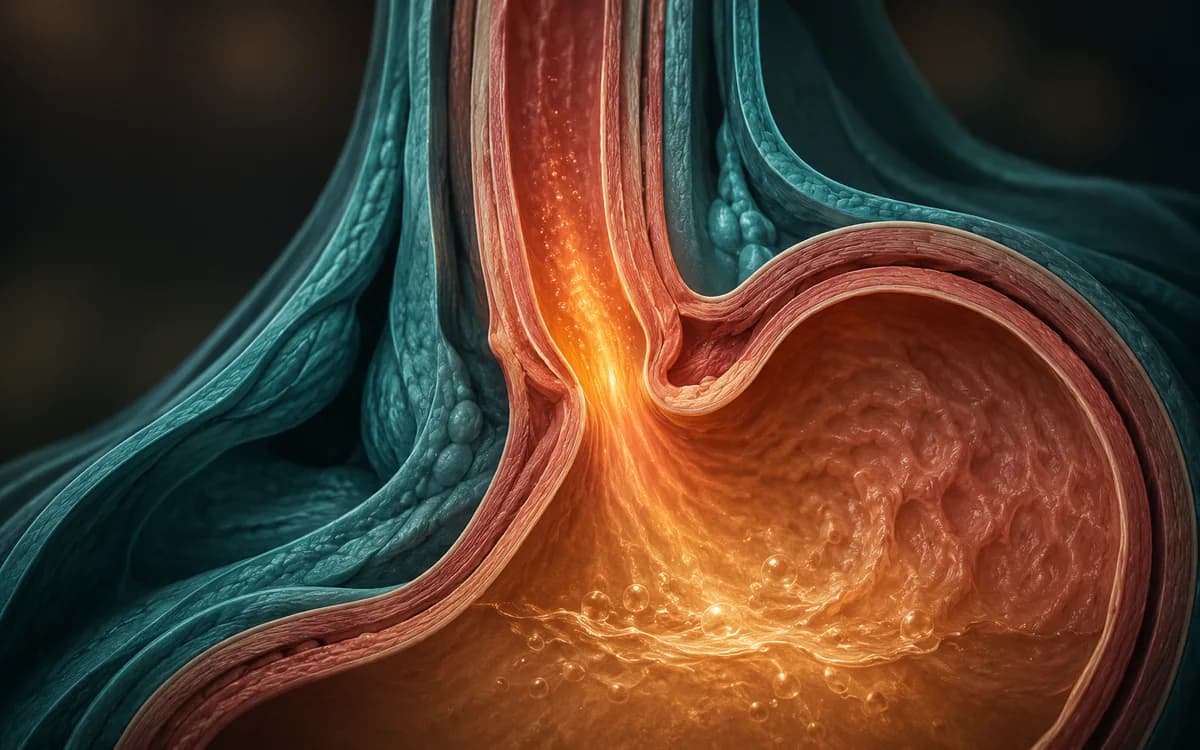
A ring of muscle at the base of the oesophagus, the lower oesophageal sphincter, should stay closed between swallows. When it relaxes at the wrong moment or weakens over time, stomach contents travel back up into the oesophagus.
The stomach is built to hold acid. The oesophagus is not. That mismatch is what produces the burning sensation behind the breastbone that most people call heartburn.
When reflux happens often enough to cause symptoms more than twice a week, or to damage the lining, it is called gastro-oesophageal reflux disease, shortened to GERD or GORD.
Understanding acid reflux and gerd
What causes it
Reflux is usually a mechanical problem rather than an infection, and several things make the valve leak more often:
- A hiatus hernia, where part of the stomach slides up through the diaphragm, which weakens the valve mechanism
- Carrying extra weight around the middle, which raises pressure inside the abdomen
- Pregnancy, for the same pressure reason, usually settling after delivery
- Large evening meals, then lying down within two or three hours
- Smoking, which directly relaxes the valve
- Alcohol, coffee, chocolate, fatty and heavily peppered food in susceptible people
- Certain medicines, including some blood pressure drugs, and anti-inflammatory painkillers
Understanding acid reflux and gerd
What it feels like
The classic symptom is a burning discomfort rising behind the breastbone, often worse after meals, when bending forward, or when lying flat at night. Many people also notice a sour or bitter taste as fluid reaches the back of the throat.
Reflux does not always announce itself as heartburn. It can present as a persistent dry cough, a hoarse voice in the morning, a sensation of a lump in the throat, recurrent sore throat, or even worsening asthma. These are sometimes called the extra-oesophageal symptoms, and they are frequently missed.
Understanding acid reflux and gerd
When to be concerned
Reflux itself is common and rarely dangerous. What matters is spotting the minority of cases where something else is going on, or where years of acid exposure have changed the lining.
Repeated acid contact inflames the oesophagus, which is called oesophagitis. In a smaller group, the lining adapts over years into a type more like the intestine. That change is Barrett's oesophagus. It is not cancer, and most people with it never develop cancer, but it slightly raises the risk and is worth knowing about so it can be monitored.
This is the main reason we do not simply medicate persistent reflux forever without ever looking.
Understanding acid reflux and gerd
How we investigate it
Not everyone with heartburn needs a camera. We recommend a gastroscopy when reflux persists despite proper treatment, when it has run for years, when it began after 45, or when any alarm symptom is present.
The procedure takes minutes under sedation. We see the lining directly, grade any inflammation, take biopsies where the lining looks changed, and test for H. pylori at the same time. Most people leave reassured; some leave with a specific diagnosis and a proper plan.
Understanding acid reflux and gerd
Treatment
Treatment works in layers, and the practical measures do more than most people expect.
Medication that reduces acid production, usually a proton pump inhibitor, allows an inflamed lining to heal and controls symptoms well. The aim is to use it deliberately for an identified problem rather than indefinitely out of habit. Where reflux is severe, persistent and proven, surgery to reinforce the valve is an option discussed with a surgeon.
- Leave at least three hours between your last meal and lying down
- Raise the head of the bed by about fifteen centimetres, which works better than extra pillows
- Eat smaller portions rather than one large evening meal
- Identify your own triggers, which differ from person to person
- Lose weight carried around the middle, the single most effective change
- Stop smoking
Understanding acid reflux and gerd
Living with reflux
Most people control reflux well and go on to have no further trouble. The goal is not to be frightened of it, but to know whether the lining is healthy, treat the cause you can identify, and re-check if the picture changes.
If your symptoms alter in character, become harder to control, or any alarm symptom appears, that is the moment to come back rather than increase the dose.
Common questions
Do I need an endoscopy for heartburn?
Not everyone does. It is recommended when reflux persists despite treatment, has lasted years, began after 45, or when any alarm symptom such as difficulty swallowing or weight loss is present.
Can acid reflux be cured?
Reflux is usually controlled rather than cured. The great majority of people manage it well with lifestyle changes and medication once the cause is understood. Surgery is an option in severe, proven cases.
Is heartburn a sign of cancer?
Almost always no. Heartburn is extremely common and rarely sinister. The combination that matters is reflux with difficulty swallowing, weight loss or anaemia, and that combination should be examined promptly.
Can I take antacids long term?
Simple antacids are safe for occasional use. If you need them most days for weeks, that is the signal to have the cause identified rather than to continue indefinitely.
Peptic ulcers
Stress and pepper get the blame for ulcers in Nigeria. The real causes are H. pylori infection and anti-inflammatory painkillers, and both are treatable once identified.
H. pylori infection
H. pylori is a bacterium carried by a large share of Nigerian adults. Most never know. In others it causes ulcers, chronic gastritis and years of unexplained stomach pain.
Gastritis
Gastritis means inflammation of the stomach lining. It is one of the most over-diagnosed and under-investigated labels in Nigerian medicine, and the cause matters more than the name.
Talk to the unit
This page is general information, not a diagnosis. If it describes you, a short consultation decides what, if anything, you need. Call +234 707 056 6272 or message +234 707 056 6272 on WhatsApp.