
Peptic ulcers
Stress and pepper get the blame for ulcers in Nigeria. The real causes are H. pylori infection and anti-inflammatory painkillers, and both are treatable once identified.
Also known as: Stomach ulcer · Duodenal ulcer · Gastric ulcer
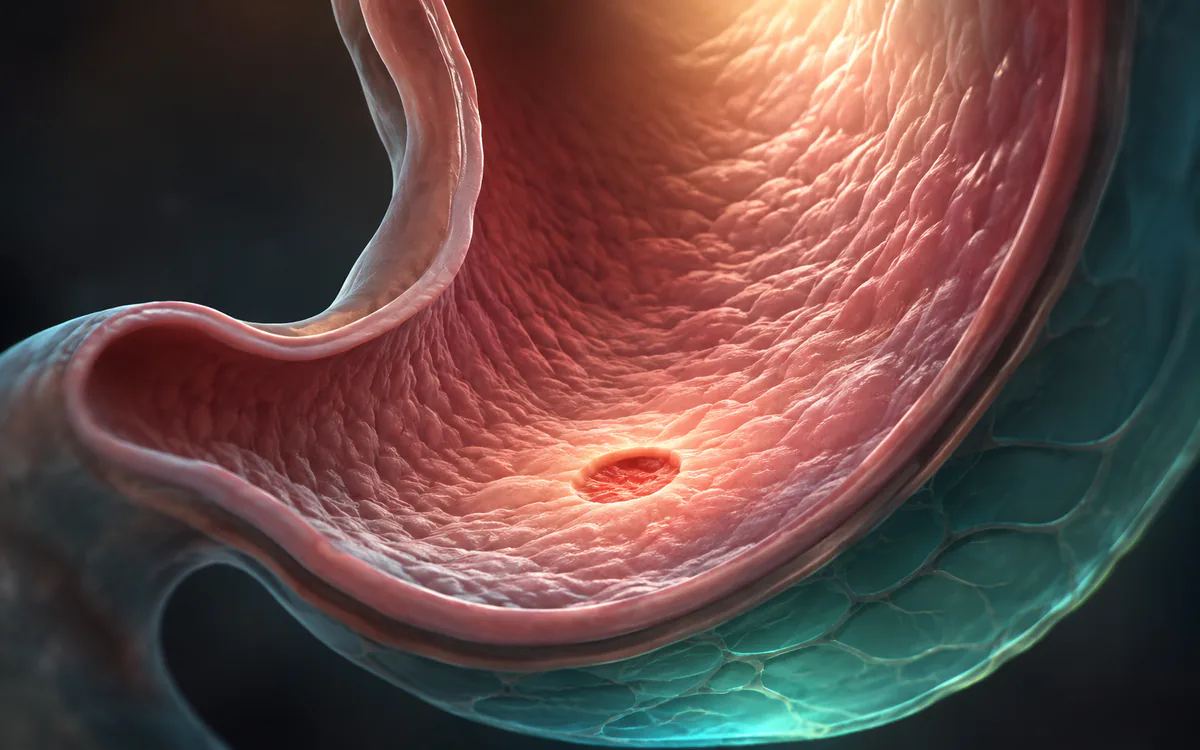
Understanding peptic ulcers
What a peptic ulcer is
A peptic ulcer is an open sore in the lining of the stomach or the duodenum, the first part of the small intestine. It is not simply irritation; it is a genuine break in the lining that extends into the tissue beneath.
The stomach produces acid strong enough to break down food, and protects itself with a layer of mucus and bicarbonate. An ulcer forms when that defence is overwhelmed and acid reaches the wall underneath.
Ulcers in the duodenum are somewhat more common than in the stomach, and tend to affect younger people. Stomach ulcers become more common with age.
Understanding peptic ulcers
What causes ulcers
Two causes account for the overwhelming majority, and neither is the one most people expect.
Helicobacter pylori is a bacterium that colonises the stomach lining and disrupts its protective layer. It is very common in Nigeria, usually acquired in childhood, and can sit silently for decades before causing trouble.
Anti-inflammatory painkillers are the second major cause: ibuprofen, diclofenac, aspirin and similar drugs. They reduce the chemicals that maintain protective mucus. This matters enormously here, because these medicines are sold freely and many people take them daily for joint or back pain over months with nobody warning them.
Less common causes include severe physical stress from serious illness, heavy alcohol use, smoking, and rarely a hormone-producing tumour that drives excess acid.
- Stress and spicy food can worsen the symptoms of an existing ulcer
- Neither of them creates an ulcer on its own
- Avoiding pepper while continuing daily diclofenac treats the wrong thing entirely
Understanding peptic ulcers
What it feels like
Ulcer pain has a recognisable rhythm. It is typically a burning or gnawing discomfort in the upper middle abdomen, often worse when the stomach is empty, briefly relieved by food, milk or antacids, and returning an hour or two later. Many people are woken by it in the early hours.
It usually comes in episodes lasting days or weeks, settling, then returning. Bloating, belching, nausea, early fullness and loss of appetite frequently accompany it. Some people, particularly older patients and those taking painkillers, have no pain at all until a complication occurs.
Understanding peptic ulcers
The complications to know about
Most ulcers heal without drama once treated. Three complications explain why they should not be ignored.
Bleeding is the commonest. It shows as vomiting blood or as a black, tarry stool, and needs urgent attention. Perforation, where the ulcer erodes through the full thickness of the wall, causes sudden severe pain and a rigid abdomen, and is a surgical emergency. Scarring from long-standing ulceration can narrow the outlet of the stomach, causing persistent vomiting of undigested food.
Understanding peptic ulcers
How we diagnose it
Symptoms suggest an ulcer but do not prove one, and several conditions imitate it. A gastroscopy settles the question directly: we see the ulcer, note its size and position, and take a small painless sample to test for H. pylori.
That sample matters for a second reason. A small proportion of stomach ulcers conceal something more serious, so where an ulcer is in the stomach rather than the duodenum, we biopsy it and often recheck after treatment to confirm it has healed completely.
Breath and stool tests for H. pylori are also available and are reasonable first steps in younger patients without alarm features.
Understanding peptic ulcers
Treatment that heals
Effective treatment has three parts, and skipping any one is why ulcers so often return.
First, reduce the acid so the lining can heal, usually with a proton pump inhibitor for several weeks. Second, remove the cause: clear H. pylori with a specific combination of two antibiotics and an acid-reducing medicine taken as a complete course, or stop the offending painkiller and find a safer alternative for your pain. Third, confirm it worked with a follow-up test after treating H. pylori.
Taking antacids alone is the equivalent of mopping the floor while the tap runs.
- Stop anti-inflammatory painkillers unless a doctor has told you to continue
- Use paracetamol for pain where it is adequate
- Stop smoking, which significantly slows ulcer healing
- Reduce alcohol
- Eat regularly rather than leaving long gaps
Common questions
Can an ulcer heal on its own?
Symptoms may settle temporarily, but unless the cause is treated the ulcer usually returns. Untreated ulcers can bleed or perforate, both of which are emergencies.
How long does an ulcer take to heal?
With correct treatment most ulcers heal within four to eight weeks, though symptoms often improve within days of starting acid-reducing medication.
Does food cause ulcers?
No. Spicy food can aggravate symptoms but does not create an ulcer. The causes are H. pylori and anti-inflammatory painkillers.
Do I need a repeat endoscopy?
For duodenal ulcers, usually not if symptoms resolve. For stomach ulcers we often repeat the examination to confirm complete healing.
Acid reflux and GERD
Occasional heartburn is normal. Reflux that returns the moment you stop medication, or has run for years, is worth examining rather than medicating indefinitely.
H. pylori infection
H. pylori is a bacterium carried by a large share of Nigerian adults. Most never know. In others it causes ulcers, chronic gastritis and years of unexplained stomach pain.
Gastritis
Gastritis means inflammation of the stomach lining. It is one of the most over-diagnosed and under-investigated labels in Nigerian medicine, and the cause matters more than the name.
Talk to the unit
This page is general information, not a diagnosis. If it describes you, a short consultation decides what, if anything, you need. Call +234 707 056 6272 or message +234 707 056 6272 on WhatsApp.