
Gastritis
Gastritis means inflammation of the stomach lining. It is one of the most over-diagnosed and under-investigated labels in Nigerian medicine, and the cause matters more than the name.
Also known as: Inflamed stomach lining · Stomach inflammation
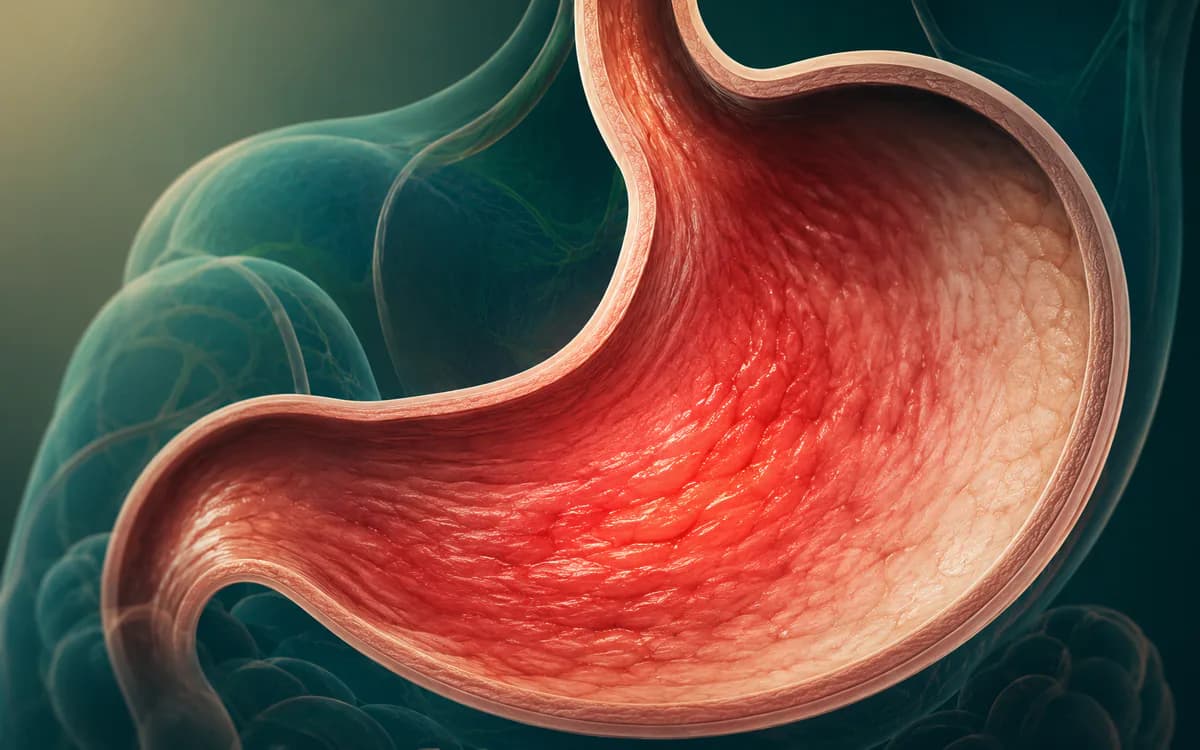
Understanding gastritis
What gastritis is
Gastritis is inflammation of the stomach lining, confirmed properly by examining the lining and, where needed, by biopsy. It is not the same as indigestion, though the words are often used interchangeably in clinic.
Acute gastritis comes on quickly and settles once the cause is removed. Chronic gastritis develops slowly over months or years, and is the form that occasionally leads to longer-term changes in the lining.
Understanding gastritis
Common causes
Gastritis is a description, not a diagnosis. The useful question is always what is causing it:
- H. pylori infection, the commonest cause of chronic gastritis worldwide
- Anti-inflammatory painkillers such as ibuprofen, diclofenac and aspirin
- Heavy or regular alcohol use
- Severe physical stress from major illness, burns or surgery
- Bile refluxing back from the small intestine into the stomach
- Autoimmune gastritis, where the body attacks its own stomach lining, which can cause vitamin B12 deficiency
Understanding gastritis
Symptoms
Many people with gastritis on endoscopy have no symptoms at all, and many people with symptoms turn out to have a normal-looking stomach. Where symptoms do occur they include a gnawing or burning discomfort in the upper abdomen, nausea, a feeling of fullness after small meals, bloating and loss of appetite.
Because these overlap almost completely with ulcer disease and with functional indigestion, symptoms alone cannot distinguish between them.
Understanding gastritis
When it needs investigating
Short-lived symptoms in a young person with an obvious trigger, such as a course of painkillers, can reasonably be treated without a camera.
A gastroscopy is warranted when symptoms persist beyond a few weeks, recur repeatedly, begin after the age of 45, or come with any alarm feature. The purpose is to identify the cause, exclude an ulcer or anything more serious, and test for H. pylori from a biopsy.
Understanding gastritis
Treatment
Treatment follows the cause rather than the label. If H. pylori is present, clearing it resolves the inflammation. If painkillers are responsible, stopping them is the treatment. Acid-reducing medication settles symptoms and allows the lining to recover in the meantime.
Where autoimmune gastritis is diagnosed, the focus shifts to monitoring and replacing vitamin B12, since the stomach can no longer absorb it properly.
- Avoid anti-inflammatory painkillers unless prescribed and necessary
- Reduce alcohol, and stop smoking
- Eat smaller, more regular meals during a flare
- Do not settle for a permanent prescription without knowing the cause
Common questions
Is gastritis serious?
Usually not. Most cases settle once the cause is removed. Long-standing chronic gastritis, particularly from untreated H. pylori, carries a small long-term risk of changes in the lining and deserves proper treatment.
How long does gastritis take to heal?
Acute gastritis often settles within days to a couple of weeks once the trigger is removed. Chronic gastritis improves over weeks to months after the underlying cause is treated.
Is gastritis the same as an ulcer?
No. Gastritis is inflammation of the lining; an ulcer is a break through it. They share causes and symptoms, which is why endoscopy is used to tell them apart.
Acid reflux and GERD
Occasional heartburn is normal. Reflux that returns the moment you stop medication, or has run for years, is worth examining rather than medicating indefinitely.
Peptic ulcers
Stress and pepper get the blame for ulcers in Nigeria. The real causes are H. pylori infection and anti-inflammatory painkillers, and both are treatable once identified.
H. pylori infection
H. pylori is a bacterium carried by a large share of Nigerian adults. Most never know. In others it causes ulcers, chronic gastritis and years of unexplained stomach pain.
Talk to the unit
This page is general information, not a diagnosis. If it describes you, a short consultation decides what, if anything, you need. Call +234 707 056 6272 or message +234 707 056 6272 on WhatsApp.