
Bowel polyps
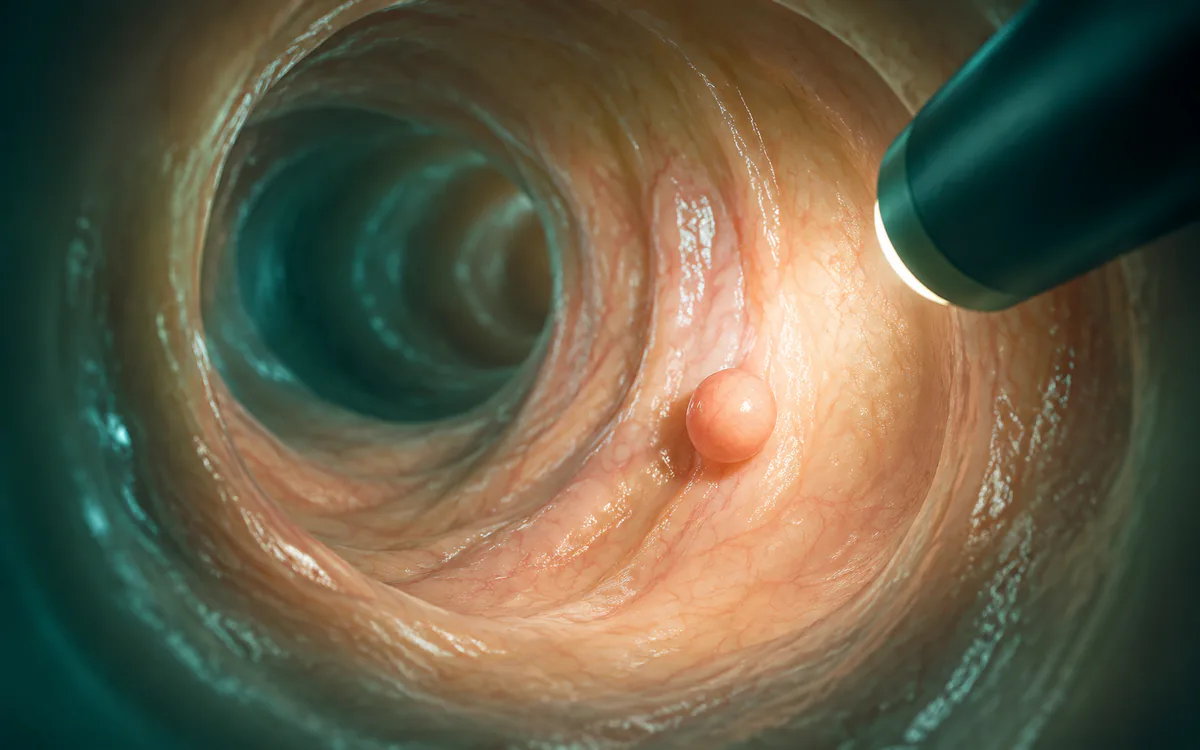
A polyp is a small growth on the bowel wall. Most are harmless, but some are the seed from which bowel cancer grows, which is why we remove them when we find them.
Also known as: Colon polyps · Colorectal polyps · Adenoma
Understanding bowel polyps
What polyps are
A polyp is an overgrowth of the cells lining the bowel, forming a small lump that projects into the bowel cavity. Some sit on a stalk like a mushroom; others are flat and sessile, which makes them harder to spot and is one reason bowel preparation quality matters so much.
Polyps are common, particularly with increasing age, and most people who have them have no idea, because they almost never cause symptoms.
Understanding bowel polyps
The types that matter
Not all polyps carry the same significance, and the laboratory report after removal tells us which type you had.
Hyperplastic polyps are very common, usually small, and generally carry little or no cancer risk. Adenomas are the type that matters, because they are the recognised precursor to most bowel cancers. Sessile serrated lesions are a flatter type now known to carry meaningful risk and to be easy to miss.
Risk within the adenoma group rises with size, with number, and with certain features seen under the microscope.
Understanding bowel polyps
How polyps become cancer
The transformation from a benign adenoma to cancer is a gradual accumulation of genetic changes, typically taking a decade or more. This is called the adenoma-carcinoma sequence.
That long timeline is the entire foundation of bowel cancer screening. It gives us a wide window in which to find and remove a polyp before it has become anything, which is why colonoscopy prevents the disease rather than merely detecting it.
Understanding bowel polyps
Symptoms
Most polyps cause no symptoms whatsoever, which is precisely why waiting for symptoms is a poor strategy.
Larger polyps can occasionally cause visible bleeding, a change in bowel habit, or slow blood loss that shows up as iron-deficiency anaemia. But by the time a polyp is large enough to announce itself, it has usually been there a long time.
Understanding bowel polyps
Removal during colonoscopy
Polyps are removed during the same colonoscopy that finds them, a procedure called polypectomy. Small ones are taken with biopsy forceps or a cold snare; larger ones with a wire snare, sometimes after lifting them from the wall with an injection.
You feel nothing, because the bowel lining has no pain nerves of the kind your skin has. The removed tissue goes to the laboratory, and that report determines what happens next.
Bleeding after polypectomy is uncommon but possible, which is why we give clear post-procedure instructions before you leave.
Understanding bowel polyps
Surveillance afterwards
Once you have had adenomas removed, you are in a higher-risk group and need repeat colonoscopy at an interval decided by what was found.
In broad terms, one or two small low-risk adenomas mean a longer interval, often several years. Multiple polyps, large polyps, or polyps with higher-risk features under the microscope mean a shorter interval. If a large polyp had to be removed in pieces, an earlier check confirms the site is clear.
Keeping to that follow-up date is the whole value of having had the polyps removed in the first place.
Common questions
Are bowel polyps cancer?
No. Polyps are benign growths. A proportion, particularly adenomas, can change into cancer over many years, which is why they are removed when found.
Does removing a polyp hurt?
Polyp removal itself is not usually felt, but the examination can cause pressure, bloating or cramping. Sedation is not routine at Zendale. You can request optional anaesthesia and discuss the appropriate comfort plan with the team.
How soon should I have another colonoscopy?
It depends on the number, size and type of polyps removed. Your report will specify the interval, which may range from one year to several.
Rectal bleeding and piles
Most rectal bleeding is piles. The danger is assuming every bleed is piles, because the exceptions are exactly the cases where waiting costs the most.
Bowel cancer
Colorectal cancer is rising in Nigeria and patients are presenting younger. It is also one of the most preventable cancers there is, provided you look before symptoms appear.
Irritable bowel syndrome
IBS is real, common and genuinely disruptive, but it does not damage the bowel and it does not lead to cancer. The diagnosis is made once the things that look like it are excluded.
Talk to the unit
This page is general information, not a diagnosis. If it describes you, a short consultation decides what, if anything, you need. Call +234 707 056 6272 or message +234 707 056 6272 on WhatsApp.