
Oesophageal cancer
Cancer of the food pipe usually announces itself first as difficulty swallowing solids. Caught at that stage it is far more treatable, which is why this symptom is never watched and waited on.
Also known as: Cancer of the food pipe · Esophageal cancer · Gullet cancer
Understanding oesophageal cancer
What it is
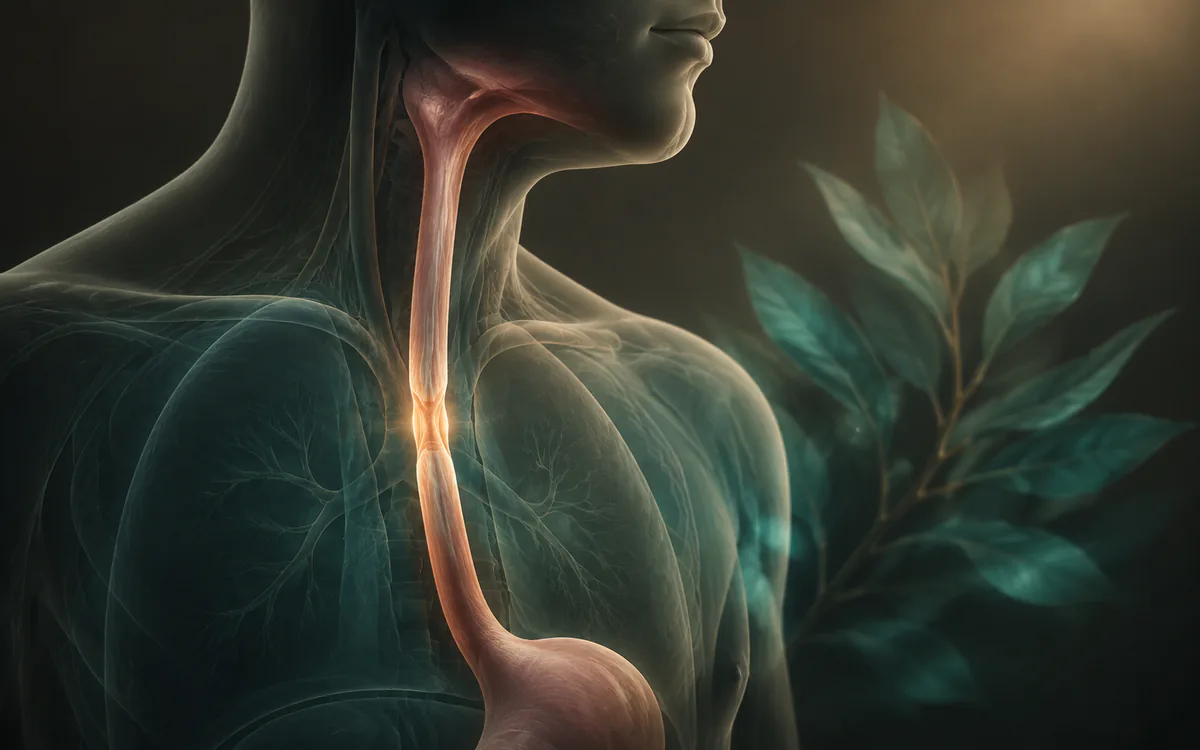
Oesophageal cancer arises in the tube connecting the throat to the stomach. There are two main types, and the distinction matters because their causes differ.
Squamous cell carcinoma arises in the flat cells lining the upper and middle oesophagus, and is linked mainly to smoking, alcohol and very hot beverages. Adenocarcinoma arises in the lower oesophagus, usually from Barrett's changes caused by long-standing reflux, and is the type rising fastest in populations where obesity and reflux are increasing.
Understanding oesophageal cancer
Risk factors
Risk is concentrated in identifiable groups, most of which involve modifiable exposures:
- Smoking, the strongest single risk factor for the squamous type
- Heavy alcohol use, which multiplies the risk when combined with smoking
- Long-standing acid reflux, and Barrett's oesophagus, for the adenocarcinoma type
- Obesity, particularly abdominal
- Regularly drinking very hot liquids
- A diet low in fresh fruit and vegetables
- Being over 60, and being male
Understanding oesophageal cancer
The warning signs
The first symptom is usually difficulty swallowing, and it follows a characteristic progression: solids first, particularly meat and bread, then softer foods, and eventually liquids. It is steady and worsening rather than intermittent.
Weight loss commonly accompanies it, partly from reduced intake and partly from the disease itself. Other features include pain on swallowing, discomfort behind the breastbone, regurgitating undigested food, a persistently hoarse voice, and anaemia from slow bleeding.
The problem is how well people adapt. Chewing more, choosing softer food, drinking water with every mouthful, all of it delays presentation by months at exactly the point where months matter.
Understanding oesophageal cancer
Why early detection changes everything
Oesophageal cancer detected while still confined to the wall of the oesophagus is treatable with a substantially better outlook, and very early lesions can sometimes be removed endoscopically without open surgery.
Once it has spread beyond the wall or to lymph nodes, treatment becomes considerably harder. There is no useful population screening programme, so early detection depends entirely on people presenting promptly with swallowing difficulty, and on those with Barrett's attending their surveillance appointments.
Understanding oesophageal cancer
How it is diagnosed
Gastroscopy is the definitive test. It allows direct visual assessment and biopsy of any abnormal area, which establishes the diagnosis and the cell type.
Where cancer is confirmed, staging with CT and other imaging determines the extent, and the case is planned jointly with surgeons and oncologists on the LASUTH campus.
Understanding oesophageal cancer
Treatment
Very early cancers confined to the lining may be treated by endoscopic resection. More established but localised disease is treated with surgery, frequently combined with chemotherapy or chemoradiotherapy beforehand.
Where the disease is advanced, treatment focuses on controlling it and on maintaining the ability to eat, which often includes placing a stent through the narrowed segment endoscopically to restore swallowing. That single intervention makes a substantial difference to quality of life.
Common questions
What is the first sign of oesophageal cancer?
Usually difficulty swallowing solid food, which progresses over weeks to months. This is why new, progressive difficulty swallowing is investigated promptly rather than watched.
Does acid reflux cause oesophageal cancer?
Long-standing reflux can lead to Barrett's oesophagus, which slightly increases the risk of adenocarcinoma. The great majority of people with reflux never develop cancer.
Can swallowing be restored if the cancer is advanced?
Often yes. A stent placed endoscopically through the narrowed section can restore the ability to eat and drink, which significantly improves quality of life.
Acid reflux and GERD
Occasional heartburn is normal. Reflux that returns the moment you stop medication, or has run for years, is worth examining rather than medicating indefinitely.
Peptic ulcers
Stress and pepper get the blame for ulcers in Nigeria. The real causes are H. pylori infection and anti-inflammatory painkillers, and both are treatable once identified.
H. pylori infection
H. pylori is a bacterium carried by a large share of Nigerian adults. Most never know. In others it causes ulcers, chronic gastritis and years of unexplained stomach pain.
Talk to the unit
This page is general information, not a diagnosis. If it describes you, a short consultation decides what, if anything, you need. Call +234 707 056 6272 or message +234 707 056 6272 on WhatsApp.