
Pancreatitis
Pancreatitis is inflammation of the pancreas. Acute attacks are a medical emergency; the chronic form causes long-term pain and problems digesting food. Gallstones and alcohol cause most cases.
Also known as: Inflamed pancreas · Acute pancreatitis · Chronic pancreatitis
Understanding pancreatitis
What the pancreas does
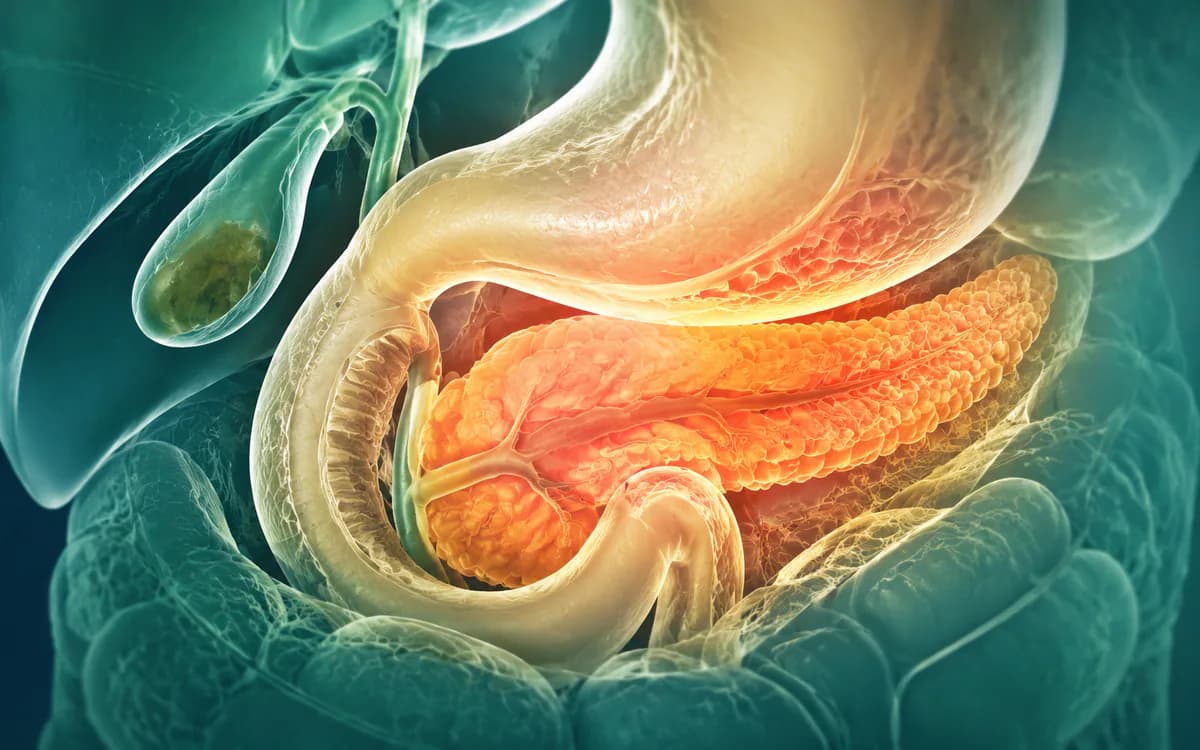
The pancreas sits behind the stomach and has two jobs. It produces enzymes that digest fat, protein and carbohydrate, delivered into the small intestine through a duct that joins the bile duct. It also produces insulin, which controls blood sugar.
Pancreatitis is inflammation of this organ. In effect the digestive enzymes activate too early and begin to digest the pancreas itself, which is why the pain is so severe.
Understanding pancreatitis
What causes it
Two causes account for the large majority worldwide, and both are relevant here:
- Gallstones, when a stone blocks the shared outlet and backs enzymes up into the pancreas
- Alcohol, particularly heavy or sustained use
- Very high blood triglycerides
- Certain medications
- Abdominal injury, or occasionally as a complication of ERCP itself
- High blood calcium
- Autoimmune pancreatitis, and inherited causes in younger patients
Understanding pancreatitis
Acute pancreatitis
An acute attack causes severe, constant pain in the upper abdomen, classically boring through to the back and often eased slightly by leaning forward. Vomiting is usual, and patients look and feel genuinely unwell.
This is a hospital admission, not something to manage at home. Treatment is supportive: fluids into a vein, pain control, careful monitoring and nutrition. Most attacks are mild and settle within days, but a minority become severe and affect other organs, which is why early assessment matters.
Where gallstones caused the attack, ERCP may be needed urgently to clear the obstruction, and the gallbladder is usually removed afterwards to prevent recurrence.
Understanding pancreatitis
Chronic pancreatitis
Repeated or sustained injury leads to permanent scarring, and the pancreas gradually loses function. The pattern is different from an acute attack: persistent or recurrent abdominal pain, and the consequences of an organ that no longer works properly.
As enzyme production falls, fat is no longer digested, producing pale, greasy, foul-smelling stools that float and are hard to flush, along with weight loss despite eating. As insulin production falls, diabetes develops.
Understanding pancreatitis
How it is investigated
Acute pancreatitis is diagnosed by the combination of typical pain and a markedly raised blood amylase or lipase, supported by imaging. An ultrasound looks for gallstones as the cause, and a CT scan assesses severity where needed.
In chronic pancreatitis, imaging shows structural change and calcification, and stool tests assess enzyme output. ERCP has a role where a duct is narrowed or obstructed and needs stenting, rather than as a first-line diagnostic test.
Understanding pancreatitis
Treatment and management
Acute attacks are treated in hospital, with the cause addressed once the patient has stabilised: gallbladder removal for stone-related disease, complete alcohol cessation for alcohol-related disease.
Chronic pancreatitis is managed long term. Pancreatic enzyme replacement taken with meals restores fat digestion and stops the weight loss. Diabetes is treated as it develops. Pain management is often the hardest part and may need specialist input. Complete abstinence from alcohol and stopping smoking are the two changes that most alter the course.
Common questions
Is pancreatitis an emergency?
Acute pancreatitis is a medical emergency requiring hospital admission. Severe constant upper abdominal pain boring through to the back with vomiting needs assessment the same day.
Can pancreatitis be cured?
Acute pancreatitis usually resolves fully once the cause is removed. Chronic pancreatitis causes permanent change and is managed rather than cured, though treatment controls symptoms well.
Why are my stools pale and greasy?
Because the pancreas is not producing enough enzyme to digest fat. This is called steatorrhoea and responds well to pancreatic enzyme replacement.
Talk to the unit
This page is general information, not a diagnosis. If it describes you, a short consultation decides what, if anything, you need. Call +234 707 056 6272 or message +234 707 056 6272 on WhatsApp.