
Coeliac disease
Coeliac disease is an immune reaction to gluten that damages the small bowel lining. It is under-diagnosed rather than absent in Nigeria, and the treatment is dietary, not medical.
Also known as: Celiac disease · Gluten intolerance · Gluten sensitive enteropathy
Understanding coeliac disease
What coeliac disease is
Coeliac disease is not an allergy and not an intolerance in the ordinary sense. It is an autoimmune condition in which gluten, a protein in wheat, barley and rye, triggers the immune system to attack the lining of the small intestine.
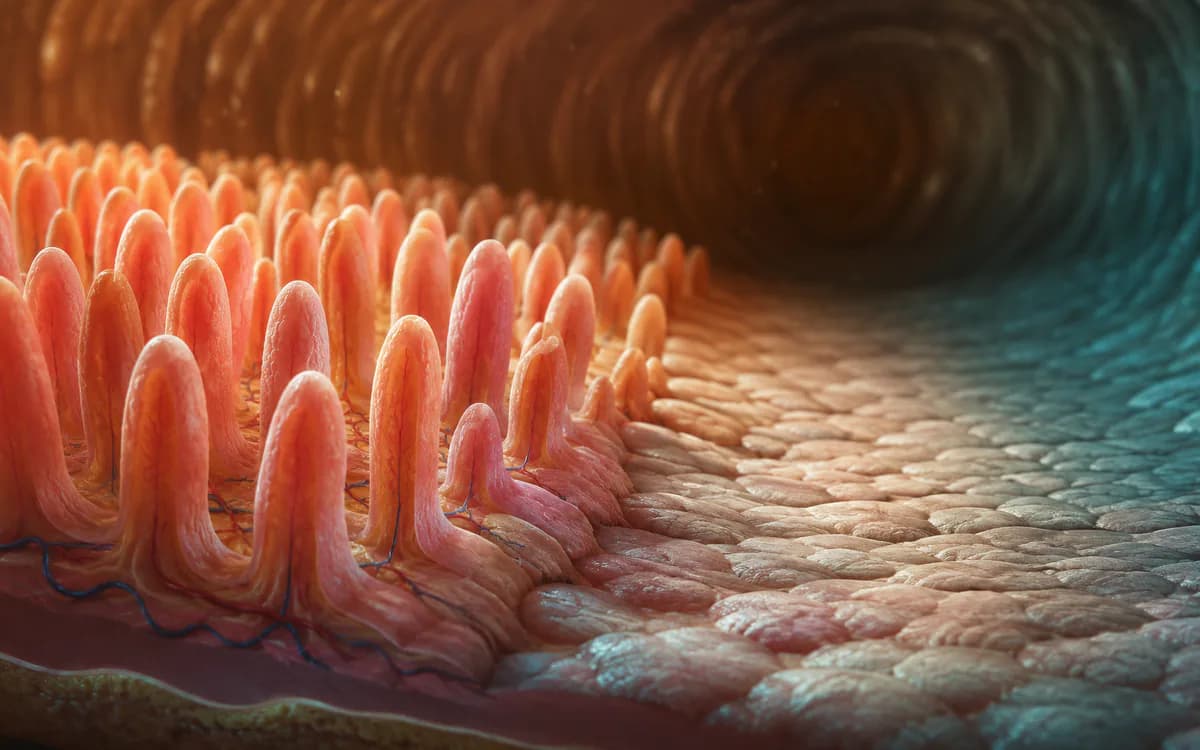
That lining is covered in finger-like projections called villi, which vastly increase the surface available for absorbing nutrients. In coeliac disease the villi flatten, and absorption falls. That is why the consequences reach far beyond the gut.
Understanding coeliac disease
Symptoms
The classic picture is diarrhoea, bloating, wind, abdominal pain and weight loss. Many patients, however, have few digestive symptoms at all and present instead with the effects of poor absorption.
- Iron-deficiency anaemia that does not respond well to iron
- Folate or vitamin B12 deficiency
- Persistent fatigue
- Mouth ulcers
- An itchy blistering rash, dermatitis herpetiformis
- Reduced bone density from poor calcium absorption
- Unexplained infertility or recurrent miscarriage
- In children, poor growth and delayed puberty
Understanding coeliac disease
Why it is missed in Nigeria
Coeliac disease was long considered a European condition. It is now recognised across Africa and the Middle East, and rising wheat consumption in Nigerian diets makes it more relevant than it once was.
The practical problem is that its symptoms overlap almost completely with IBS and with chronic infective diarrhoea, both of which are far more common here. Without specific testing, it is simply never considered.
Understanding coeliac disease
Getting tested properly
There is one rule that matters more than any other: do not start a gluten-free diet before you are tested.
Both the blood test and the biopsy depend on the immune reaction being active. Remove gluten first and both can be falsely normal, leaving you on a restrictive lifelong diet without ever knowing whether you needed it, and needing to eat gluten again for weeks to be tested properly.
Testing begins with coeliac serology, a blood test for specific antibodies. If positive, a gastroscopy with biopsies from the duodenum confirms the diagnosis by showing the characteristic flattening of the villi. Because the damage can be patchy, several samples are taken.
Understanding coeliac disease
Treatment
The treatment is a strict, lifelong gluten-free diet. There is no medication, and no version of the diet that permits occasional exceptions, because even small amounts reactivate the immune response.
In Nigeria this is more achievable than many people expect, since a great deal of traditional food is naturally gluten free: rice, yam, cassava, plantain, maize, beans, and dishes built around them. The difficulty lies with wheat-based bread, semolina, noodles, and with hidden gluten in sauces, seasoning cubes and processed foods.
Once gluten is removed, the lining heals over months, symptoms resolve and absorption recovers. Deficiencies are corrected in the meantime, and bone density is checked, since it is frequently affected at diagnosis.
Understanding coeliac disease
Family members
Coeliac disease runs in families. First-degree relatives, meaning parents, siblings and children, have a substantially higher risk than the general population and should be tested if they have any suggestive symptoms, and considered for testing even without them.
Common questions
Should I go gluten free before testing?
No. Removing gluten before testing can make both the blood test and the biopsy falsely normal. Keep eating gluten until testing is complete.
Is coeliac disease found in Nigeria?
Yes. It was long thought to be a European condition but is now recognised across Africa. It is under-diagnosed here rather than absent.
Is a biopsy always needed?
In adults, biopsy at gastroscopy remains the standard for confirming the diagnosis after a positive blood test, because a lifelong diet is a significant commitment to base on serology alone.
Acid reflux and GERD
Occasional heartburn is normal. Reflux that returns the moment you stop medication, or has run for years, is worth examining rather than medicating indefinitely.
Peptic ulcers
Stress and pepper get the blame for ulcers in Nigeria. The real causes are H. pylori infection and anti-inflammatory painkillers, and both are treatable once identified.
H. pylori infection
H. pylori is a bacterium carried by a large share of Nigerian adults. Most never know. In others it causes ulcers, chronic gastritis and years of unexplained stomach pain.
Talk to the unit
This page is general information, not a diagnosis. If it describes you, a short consultation decides what, if anything, you need. Call +234 707 056 6272 or message +234 707 056 6272 on WhatsApp.